EMUG Completed 25 Years of Engineering Excellence in Mechanical Services
  • English
  • العربية
  • 中文(简体)
  • Français
  • Deutsch
  • हिन्दी
  • 日本語
  • 한국어
  • Português
  • Русский
  • Español
  • Türkçe

About Us

A trusted engineering partner helping global OEMs and manufacturers accelerate product development through specialized design, engineering and digital engineering solutions.

Automotive & Mobility
Aerospace & Defense
Industrial & Heavy Engineering
Manufacturing & Smart Factory
Aerospace Manufacturing & MRO
Rail, Transportation & Infrastructure
Consumer Products & Appliances
Hi-Tech, Electronics & Semiconductors
Energy & Sustainability
Emerging & Future Industries

Engineering Resource Augmentation

Scale your engineering capacity instantly with pre-qualified domain experts. EMUG provides dedicated engineers and scalable teams that integrate seamlessly into your product development programs.

Domain-Experts

Industry-specialized engineering talent

Seamless Integration

Works within your engineering workflows

Global Delivery

Support for worldwide engineering programs

Engineering AI Assistants & Agents

Deploy LLM-powered AI assistants that answer engineering questions from PLM knowledge bases, and AI agents that execute multi-step workflows across Teamcenter, Windchill, and SAP — augmenting engineering productivity with governed, traceable AI actions using the EMUG AGENT Framework.

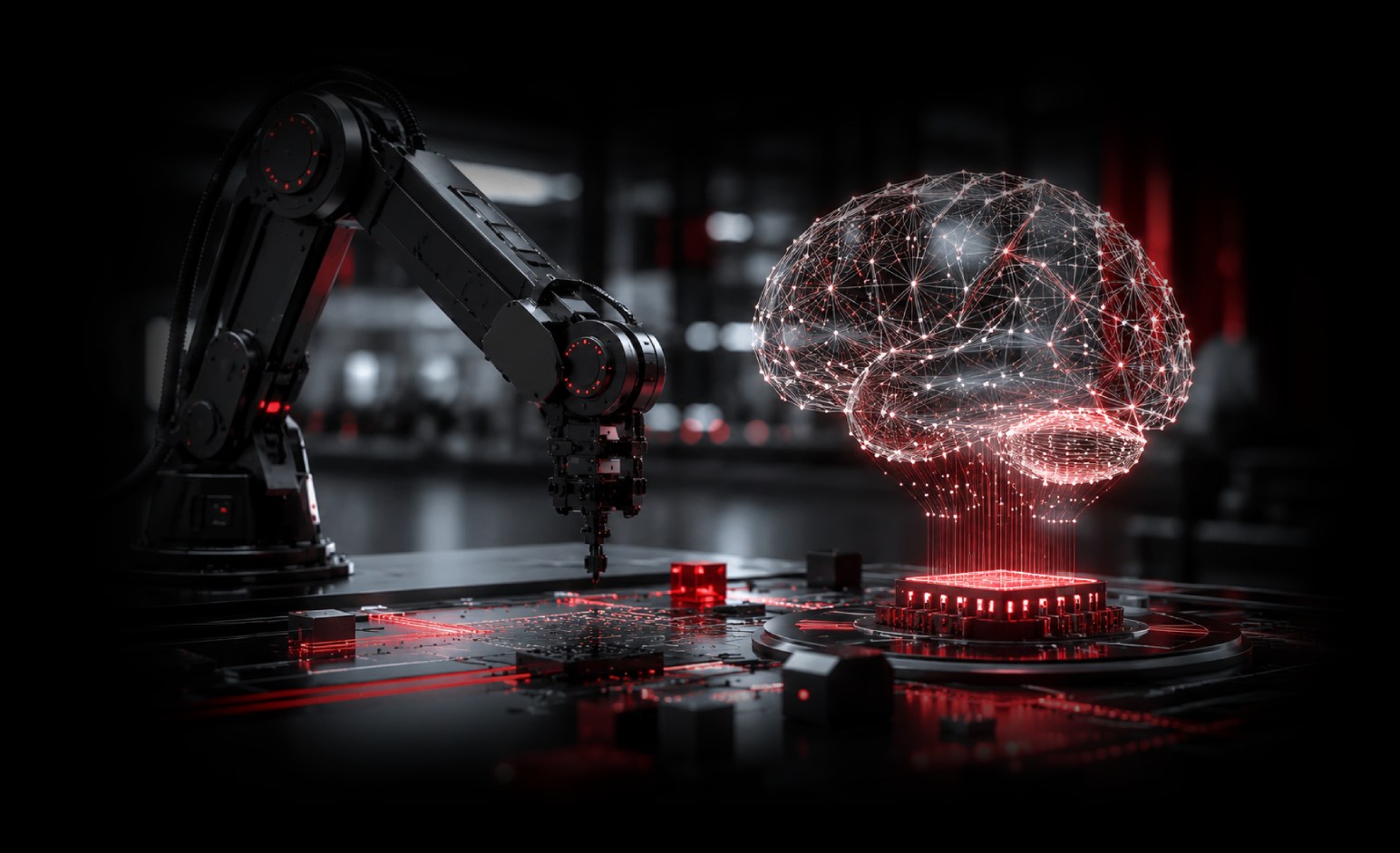
Shaping the Future of AI in Engineering & Manufacturing

Engineering AI Assistants & Agents

Engineering AI assistants and agents apply large language models, retrieval-augmented generation, and agentic workflow frameworks to the engineering processes where knowledge access delays, escalation bottlenecks, and cross-system task execution consume the most senior engineer time. EMUG Tech deploys engineering AI assistants and agents for automotive OEMs, aerospace and defense organisations, industrial manufacturers, and energy companies across 20 countries using the EMUG AGENT Framework — connecting agents directly to Teamcenter, Windchill, 3DEXPERIENCE, and SAP through governed API integrations.

The difference between an engineering AI assistant and a general AI chatbot is data grounding and system integration. A general chatbot answers from training data that does not know your product, your change history, or your engineering decisions. EMUG AGENT-deployed assistants are connected to your PLM knowledge base through vector database indexes and REST APIs — returning cited answers from your actual engineering documents and product data. Agents go further: they execute actions in PLM and SAP systems within defined permission boundaries, completing multi-step engineering tasks that previously required an engineer to navigate three or four systems sequentially.

CORE CAPABILITIES

EMUG Tech's engineering AI assistant and agent capability spans seven specialised service areas — from PLM-connected knowledge assistants and BOM query agents through ECM automation, standards compliance checking, maintenance decision support, and multi-step workflow agents that execute actions across PLM and SAP.

Engineering Knowledge and Decision Support Assistant

RAG-based AI assistant connected to PLM and engineering knowledge bases — answering engineering questions with cited responses from Teamcenter, Windchill, 3DEXPERIENCE, SharePoint, and standards libraries. Engineers ask in natural language and receive specific, sourced answers from actual product documents. Reduces query resolution time by 70–80% and senior engineer escalation volume by 40–60%.
Enquire Now →

BOM Query and Analysis Agent

AI agent with direct PLM BOM API access — translating natural language BOM questions into structured queries, traversing EBOM and MBOM structures, identifying where-used relationships, and surfacing cross-system BOM discrepancies between PLM and SAP. Reduces BOM interrogation time by 60–75%. Connects to Teamcenter BOM management APIs, Windchill WTPart, and SAP MM/PP BOM structures.
Enquire Now →

Engineering Change Management Agent

AI agent for ECO workflow support — automated change impact analysis from PLM where-used data, change description drafting from structured change data, affected document list compilation, and cross-system change notification drafting for supplier and customer communication. Reduces ECO documentation time by 50–65%. Integrates with Teamcenter ECM, Windchill change workflows, and SAP ECM.
Enquire Now →

Standards and Regulatory Compliance Agent

AI agent for real-time standards compliance checking — querying applicable standards (ISO, ASME, IATF 16949, AS9100, IPC, RoHS, REACH) against engineering designs and documents, identifying compliance gaps, and generating compliance checklists. RAG pipeline on standards corpora with rule extraction models. Compliance issues identified at design creation, not at formal review — reducing rework cycles.
Enquire Now →

Maintenance Decision Support Agent

AI agent for maintenance engineering support — retrieving relevant repair procedures from maintenance manuals, identifying applicable spare parts from equipment history and catalogue data, summarising past fault history for similar equipment, and drafting SAP PM work order descriptions. Reduces maintenance engineer decision time by 40–55%. Connects to SAP PM/EAM, equipment master, and maintenance history.
Enquire Now →

Multi-Step Engineering Workflow Agent

Agentic workflow automation for multi-system engineering processes — agents that query PLM, check standards, draft documents, and update SAP records as a single automated workflow with defined human approval checkpoints for consequential actions. Built using LangChain and LangGraph with tool-use APIs for PLM and SAP. Eliminates the cross-system navigation that consumes engineer time.
Enquire Now →

Design Review and Requirements Analysis Agent

AI agent for design review preparation — automatically compiling review packs from PLM data, checking design against customer requirements and applicable standards, identifying open actions from previous reviews, and drafting review agenda and checklist items. RAG on requirements databases (Teamcenter Requirements Manager, Windchill RV&S) for traceability checking.
Enquire Now →

KEY METRICS

Reduction in Engineering Query Resolution Time on EMUG AGENT Assistant Deployments
0 %
Reduction in ECO Impact Analysis Time Through Engineering AI Agent Automation
0 %
Countries Where EMUG Tech Delivers Engineering AI Assistant and Agent Programmes
0 +

The EMUG AGENT Framework — Our Engineering AI Assistants & Agents Delivery Methodology

EMUG designs and planning to deliver all engineering AI assistant and agent programmes using the EMUG AGENT Framework five phases covering Assess, Govern, Embed, Navigate, and Train. AGENT addresses the central risk of engineering AI deployment: agents with unconstrained access to PLM and SAP systems without defined permission boundaries create IP and compliance exposure rather than productivity value. Every AGENT programme designs governance before development begins.
1

ASSESS

Engineering workflow analysis and agent scoping — mapping the engineering processes where AI assistants and agents can eliminate decision delays, reduce escalation time, and automate multi-step workflows. Identifying enterprise data sources the agent needs to access (PLM, SAP, CAD APIs, standards libraries), API availability assessment, access control requirements, and latency and accuracy acceptance criteria per use case. Deliverable: Engineering Agent Use-Case Register with Integration Architecture and Acceptance Criteria Definition.
2

GOVERN

Agent safety, access control, and guardrail design — defining what actions each agent is permitted to take autonomously vs what requires human approval, designing the human-in-the-loop checkpoints for consequential decisions, establishing data access policies for PLM and SAP integration, configuring output confidence thresholds and fallback behaviours, and designing the audit trail for every agent action and recommendation. Deliverable: Agent Governance Framework with Permission Matrix, Guardrail Design, and Audit Trail Specification.
3

EMBED

Agent development and enterprise system integration — building LLM agent pipelines using LangChain, LangGraph, or custom agentic frameworks; connecting agents to PLM (Teamcenter, Windchill, 3DEXPERIENCE) through REST APIs; integrating SAP data access for BOM, change management, and maintenance context; building vector database knowledge indexes from engineering documents; and developing the tool-use APIs that agents call to execute actions in enterprise systems. Deliverable: Deployed Engineering AI Agent with Enterprise System Integration.
4

NAVIGATE

User interface, workflow integration, and go-live — deploying the agent interface within engineering team workflows (PLM portal widget, Microsoft Teams bot, web application, or API endpoint for programmatic use), user acceptance testing with engineering leads, performance validation against acceptance criteria (response accuracy, latency, action success rate), and phased go-live starting with the highest-value user group. Deliverable: Production Agent Interface with UAT Sign-Off and Performance Baseline Report.
5

TRAIN

Adoption enablement, feedback loop, and continuous improvement — engineering team training on effective agent interaction, prompt engineering guidance for domain-specific queries, feedback collection on agent response quality, automated fine-tuning pipeline from feedback data, knowledge base update cadence as PLM and engineering documentation evolves, and expansion of agent capabilities to additional use cases and user groups. Deliverable: Trained Engineering Teams with Agent Adoption Analytics and Continuous Improvement Plan.

ENGINEERING AI AGENT APPLICATION MATRIX

Engineering AI Agent ApplicationPrimary Business ImpactKey TechnologiesEnterprise Integration
Engineering Knowledge and Decision Support AgentEngineering query resolution time reduced 70–80%. Senior engineer escalation volume reduced 40–60%. Decision consistency improved.RAG pipelines, GPT-4o, Claude 3.5, LangChain, vector databases, semantic search, context window managementTeamcenter, Windchill, 3DEXPERIENCE document APIs, SAP DMS, engineering standards libraries, SharePoint
BOM Query and Analysis AgentBOM interrogation time reduced 60–75%. Where-used and impact analysis automated. Cross-system BOM discrepancy detection.LLM with structured PLM API tool-use, BOM traversal algorithms, natural language to structured query translationTeamcenter BOM management APIs, Windchill WTPart queries, SAP MM material master, SAP PP production BOM
Engineering Change Management AgentECO impact analysis time reduced 50–65%. Change description drafting automated. Affected document list compiled automatically.LLM agents with PLM change management API integration, where-used analysis automation, document generation pipelinesTeamcenter ECM workflows, Windchill change process APIs, 3DEXPERIENCE action bar, SAP ECM integration
Standards and Regulatory Compliance AgentStandards compliance review time reduced 60–75%. Non-compliant design decisions identified at creation not at review.RAG on standards corpora (ISO, ASME, IATF, AS9100, IPC), rule extraction models, document gap analysis LLMsPLM document control, CAD annotation data, regulatory standards databases, customer requirement repositories
Maintenance Decision Support AgentMaintenance engineer decision time reduced 40–55%. Correct repair procedure retrieval automated. Parts identification accelerated.RAG on maintenance manuals and repair procedures, equipment history query tools, spare parts lookup APIsSAP PM/EAM work order context, equipment master data, maintenance history, spare parts catalogue
Multi-Step Engineering Workflow AgentEnd-to-end engineering workflow execution automated. Cross-system data orchestration eliminated as manual task.LangGraph multi-agent orchestration, tool-use APIs for PLM and SAP, human-in-the-loop approval workflowsPLM APIs (Teamcenter, Windchill), SAP BAPI/REST APIs, CAD system APIs, document management systems
EMUG's engineering AI assistant and agent programmes are calibrated for five key manufacturing and engineering sectors — with sector-specific knowledge base configurations, compliance and regulatory context, and PLM and SAP integration patterns built for each sector's engineering decision environment.

INDUSTRY ALIGNMENT

AI, Data and Intelligent Automation Services for Engineering and Manufacturing Enterprises
Automotive OEMs & Tier 1 Suppliers

Engineering knowledge assistants connected to Teamcenter or Windchill BOM history and design decision records. ECO impact analysis agents for IATF 16949 change management acceleration. Standards compliance agents for IATF, VDA, and customer-specific engineering requirement checking. BOM query agents for variant configuration and where-used analysis.

Aerospace & Defense

Engineering knowledge assistants for AS9100 design review preparation and compliance documentation. ITAR-compliant on-premise deployment for defense programme data. Maintenance decision support agents for MRO operations. Requirements traceability agents connected to Teamcenter Requirements Manager or Windchill RV&S.

Industrial Machinery & Equipment

Service documentation agents for field engineer support — retrieving repair procedures and spare parts from maintenance manuals connected to SAP PM. Application engineering assistants for configure-to-order product selection. ECO agents for service parts and documentation update workflows.

Energy, Oil & Gas

Procedure and regulatory compliance agents for operations and maintenance teams — retrieving applicable API, ASME, and regulatory procedure requirements. Management of Change (MOC) workflow agents for engineering modification management. Maintenance decision support agents connected to SAP PM equipment master and work order history.

High-Tech & Electronics

Engineering knowledge assistants for fast-cycle product development — accelerating ECO documentation, standards compliance checking against IPC and RoHS requirements, and design review preparation. BOM query agents for multi-CAD product structures. RFQ response agents for engineering services and component supplier proposals.

VALUE PROPOSITION
AI agents grounded in your PLM and SAP data — not general internet knowledgeEvery EMUG AGENT solution connects directly to Teamcenter, Windchill, or 3DEXPERIENCE through REST APIs and vector database indexes — so agent responses are grounded in your actual product data, change history, and engineering decisions, not in general LLM training knowledge that does not know your product or your processes.
Human-in-the-loop design for every consequential engineering decisionEMUG AGENT governance framework defines precisely which agent actions are autonomous and which require engineer approval before execution — ensuring AI agents augment engineering judgment rather than bypassing it for decisions that carry safety, quality, or regulatory consequences.
Agents that take actions — not just answer questionsEMUG AGENT solutions are configured with tool-use APIs that allow agents to execute actions in PLM and SAP systems: creating change requests, generating impact analysis reports, updating BOM records, and triggering workflow steps — completing multi-step engineering tasks that previously required an engineer to navigate multiple systems sequentially.
ITAR and IP protection for engineering agent deploymentsEngineering AI agent deployments for defense and aerospace programmes are architected with ITAR data handling requirements: on-premise or private cloud LLM deployment options, access control policies restricting agent data access to authorised users and export-controlled document categories, and complete audit trails of every data access and action for compliance reporting.
Measurable adoption from day one through structured change managementEMUG AGENT Train phase delivers structured engineering team enablement — not just a launch email. Prompt engineering guides, use-case specific training, and feedback collection ensure adoption rates above 75 percent within 60 days of go-live, measured through usage analytics and response quality feedback from engineering teams.
Continuous capability improvement as engineering knowledge evolvesEMUG AGENT knowledge indexes are maintained with change data pipelines that update vector database content as PLM documents, BOMs, and engineering decisions change — ensuring agents provide current answers from live engineering data rather than becoming stale six months after deployment.
Frequently Asked Questions

Expert answers from EMUG Tech's Engineering AI Assistants & Agents practice.

Engineering AI assistants answer questions and provide decision support — they retrieve information from PLM knowledge bases, standards libraries, and engineering data sources and synthesise it into clear answers with citations. Engineering AI agents go further: they can take actions in enterprise systems — creating change requests in Teamcenter, querying SAP BOM data, generating impact analysis reports, and executing multi-step workflows that cross PLM and ERP system boundaries. EMUG AGENT programmes deploy both: assistants for knowledge access and decision support, and agents for workflow automation and multi-system task execution. The distinction matters for governance: assistants carry low risk as they only read and present data, while agents require carefully designed permission boundaries and human-in-the-loop checkpoints for consequential actions.
EMUG AGENT is the five-phase engineering AI assistant and agent delivery methodology: Assess — workflow analysis and agent scoping with integration architecture definition; Govern — agent safety design, permission matrix, guardrail configuration, and audit trail specification; Embed — agent development, PLM and SAP API integration, vector database build, and enterprise system tool-use connection; Navigate — user interface deployment, UAT, and phased go-live; Train — adoption enablement, feedback loop activation, and continuous improvement pipeline. AGENT addresses the core risk of engineering AI deployment: agents that have access to PLM and SAP systems without defined permission boundaries, human approval checkpoints, and audit trails create compliance and IP risk rather than productivity value.
EMUG AGENT connects AI agents to PLM and SAP systems through two integration layers: a retrieval layer using REST APIs to query PLM document content, BOM structures, and change history that is indexed into a vector database for semantic search; and an action layer using PLM and SAP APIs configured as agent tools that the LLM can call to execute specific actions — creating change requests, querying where-used, updating attributes, or triggering workflow steps. Teamcenter integration uses the Teamcenter Services REST API and Active Workspace APIs. Windchill integration uses the Windchill REST Services. SAP integration uses BAPIs, OData services, and the SAP Business Technology Platform (BTP) for cloud deployments. Access control policies are applied at both the API and vector database layer.
EMUG AGENT governance is designed in the Govern phase before any agent development begins: a permission matrix defines precisely which PLM and SAP actions each agent can execute autonomously (read operations, report generation, draft creation) versus which require explicit human approval before execution (creating change orders, modifying BOM records, triggering workflow approvals). Guardrail configurations prevent agents from accessing data outside their defined scope or executing actions above their permission level. Every agent action and data access is logged to an immutable audit trail for compliance reporting. Output confidence thresholds route low-confidence responses to human review rather than presenting uncertain answers as definitive. EU AI Act risk classification is performed for each agent deployment.
The highest-value engineering AI agent use cases share three characteristics: they involve accessing and synthesising information from multiple systems, they require domain knowledge to interpret correctly, and they currently consume significant senior engineer time. Top use cases include: engineering change impact analysis (querying PLM where-used, identifying affected documents, drafting change descriptions); BOM interrogation and cross-system reconciliation; standards and regulatory compliance checking against applicable codes; maintenance troubleshooting support from repair manuals and equipment history; RFQ technical response assembly from product capability data; and design review preparation from PLM data and customer requirements. Use cases where the decision carries safety or regulatory consequences are best deployed with human-in-the-loop approval rather than full autonomous execution.
Accuracy for RAG-based engineering AI assistants is measured on answer accuracy (correct information from the knowledge base), hallucination rate (fabricated information not present in sources), and citation correctness (source documents cited are relevant to the answer). EMUG AGENT programmes define acceptance criteria for each metric at the Assess phase — typically targeting 85 to 95 percent answer accuracy, below 2 percent hallucination rate, and above 90 percent citation relevance — validated with engineering subject matter experts before production go-live. Accuracy is highly dependent on knowledge base quality: well-structured PLM documentation with consistent metadata produces significantly higher accuracy than inconsistently tagged document collections.
A focused single-use-case engineering AI assistant — for example, a knowledge Q&A agent connected to one PLM knowledge domain — typically reaches production in 6 to 10 weeks. A multi-capability agent programme covering knowledge access, BOM query, and ECM automation typically takes 4 to 6 months from Assess to full Navigate go-live. A complex multi-agent workflow automation programme with SAP and PLM action integration may take 6 to 12 months depending on API availability and access control complexity. The most common schedule constraint is enterprise system API access provisioning and security review, not model development.
Engineering AI assistant and agent programmes are delivered across automotive OEMs and Tier 1 suppliers, aerospace and defense organisations, industrial machinery manufacturers, energy companies, and high-tech electronics firms in 20 countries: Germany, France, UK, Netherlands, Sweden, Italy, Spain, Poland, Czech Republic in Europe; India, Japan, South Korea, China, Malaysia, Thailand in Asia-Pacific; UAE and Saudi Arabia in the Middle East; USA, Canada, Mexico, Brazil in the Americas. Engineering AI agent delivery from Hyderabad, Germany, and Dubai with on-site deployment and integration capability at client engineering centres globally.

Deploy Engineering AI That Acts — Not Just Answers.

Connect with EMUG Tech's engineering AI team to assess your workflow automation opportunities, define your agent architecture and governance framework, and scope your AGENT programme. Request a free engineering AI feasibility assessment below.
Advancing industries requires reimagining how products are designed, built and optimized at scale.

Your Engineering Knowledge — Accessible, Actionable, Always Current.

Partner with EMUG Tech to deploy engineering AI assistants and agents that are grounded in your PLM and SAP data, governed for safety and IP protection, and designed to take actions in enterprise systems — not just answer questions using the EMUG AGENT Framework.
AI, Data and Intelligent Automation Services for Engineering and Manufacturing Enterprises

Quick Enquiry Form

This field is for validation purposes and should be left unchanged.
Follow EMUG on LinkedIn Enquire Now EMUG